Choosing Circle Cut Stainless Steel Blanks requires more than comparing prices or selecting a familiar metal grade. Each blank must match the intended forming, machining, welding, or fabrication process. Diameter, thickness, flatness, edge condition, and surface finish can affect production results. A small variation may create uneven pressing, weak weld preparation, or unnecessary material waste.
Start with the application.
304 stainless steel often suits general fabrication and food-related equipment, while 316 offers stronger resistance to chloride exposure. However, grade selection should follow the actual environment, temperature, forming demands, and applicable specifications. Thickness must also reflect load requirements and manufacturing tolerances. A polished surface may look attractive, but it can reveal scratches more easily during handling. A mill finish may be more practical for later processing.
Supplier reliability matters just as much. Request material certificates, dimensional tolerances, heat numbers, and inspection records before placing a large order. Experienced buyers also examine packaging. Thin blanks can develop dents when stacked without protective separators. That detail is easy to overlook.
Do not trust appearance alone.
Clear product drawings and verified measurements reduce costly surprises. It is also wise to test a small batch before approving full production. I have seen seemingly minor edge burrs slow automated feeding, although the material itself met the stated grade. This is where practical judgment matters. Standards guide the purchase, but real workshop conditions expose weaknesses. A careful evaluation of Circle Cut Stainless Steel Blanks should balance technical evidence, supplier experience, and the demands of the final product.
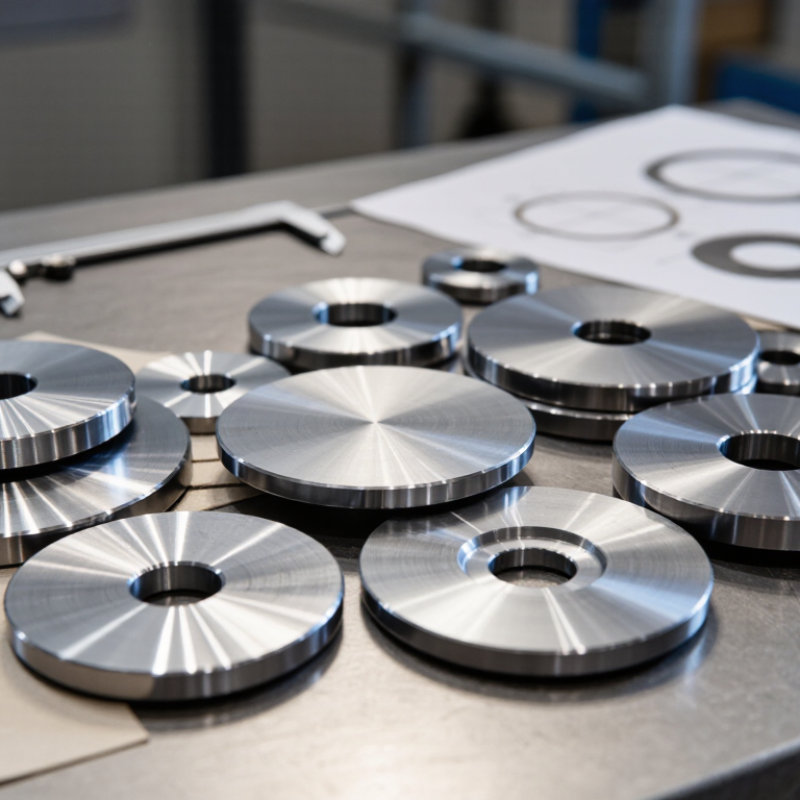
Types and Grades of Stainless Steel for Circle Blanks
How to Choose Circle Cut Stainless Steel Blanks?
Choosing a stainless steel circle blank starts with the service environment, not appearance. The International Stainless Steel Forum reported global crude stainless steel production at about 58.4 million tonnes in 2023. That scale reflects broad demand across food equipment, construction, transport, and chemical processing. Yet higher production does not make every grade interchangeable.
Grade 304 is a practical choice for general kitchenware, tanks, and indoor components. It contains chromium and nickel, giving reliable corrosion resistance and good formability. Grade 316 adds molybdenum, which improves resistance to chlorides and coastal exposure. It usually costs more. Grade 430 contains less nickel and offers magnetic behavior, moderate corrosion resistance, and lower material cost. Grade 410 provides higher hardness after heat treatment, but it needs more careful corrosion control.
The tempting shortcut is choosing 304 for everything. It works often, but not always. For deep drawing, check elongation, hardness, grain direction, and blank thickness. A circle that looks flat may crack around the rim during pressing. ASTM A240 is commonly referenced for stainless sheet and plate requirements, while ASTM A480 covers general dimensional and surface conditions. Verify the supplier’s mill test certificate, grade designation, thickness tolerance, and surface finish. A 2B finish may suit practical forming, while a polished finish can expose every scratch. Do not ignore burrs. Small edge defects can become larger cracks during forming. Yet material choice alone cannot guarantee success; tooling radius, lubrication, and forming speed still need testing.
Key Dimensions and Thickness Requirements
Choosing a circle cut stainless steel blank begins with the part’s finished diameter. Measure across the widest point, not the visible edge burr. Add only the machining allowance your process can actually use. A blank that is too large wastes material. One that is too small cannot recover.
Confirm diameter tolerance with a caliper and, for tighter work, a micrometer. Record several readings around the circle. They may not match perfectly. That difference can reveal ovality, cutting distortion, or measurement error.
Also check flatness on a clean reference surface. A slight dish may affect forming and assembly.
Thickness needs equal attention. Match the blank to the forming load, stiffness requirement, and final weight. Thin material may wrinkle during pressing, while thicker stock can resist bending and require more force. Specify nominal thickness and allowable tolerance, such as 1.5 mm with a defined range, rather than writing “about 1.5 mm.”
Confirm whether thickness is measured before or after surface finishing. For precision parts, inspect several points because rolled sheet can vary across its width.
Choose the stainless grade based on corrosion exposure, temperature, and forming behavior. Do not let a familiar grade replace testing. Request material certificates, dimensional inspection data, and edge-condition details.
Sharp edges need controlled handling. One overlooked detail is the cut method; heat input or burrs can change the usable diameter. Recheck the blank against the actual tool, not only the drawing.
Surface Finish and Edge Quality Considerations
How to Choose Circle Cut Stainless Steel Blanks?
Surface finish should match the blank’s working environment, not just its appearance. A smooth finish helps reduce dirt retention and simplifies cleaning. Brushed surfaces can hide light scratches, but their grain direction must remain consistent. Highly polished material looks impressive, yet it reveals fingerprints, dents, and handling marks quickly. I have seen attractive blanks fail inspection because the finish changed near the cut edge. Surface uniformity matters more than shine.
Inspect the rim under angled light. A clean edge should show minimal burrs, tearing, or heat discoloration. Run a cotton cloth around the circumference. If fibers catch, further deburring may be necessary. Check the flat face with a straightedge, especially on larger diameters. Warping can affect assembly, even when the measured thickness is correct. It is easy to overlook.
Ask for the specified finish grade, thickness tolerance, cutting method, and edge treatment. Laser cutting may leave a heat tint, while shearing can create a sharper rollover on one side. Waterjet cutting often produces a cooler edge, but its surface may need additional finishing. Request inspection samples when the application is sensitive. A sample is more reliable than a general promise. Still, no process is perfect. Minor marks may appear during packing, so protective film and careful handling deserve equal attention.
Choosing the Right Cutting Method and Tolerance
How to Choose Circle Cut Stainless Steel Blanks?
Choosing the right cutting method starts with thickness, diameter, edge quality, and required tolerance. Laser cutting suits thin stainless blanks and repeatable production. Its focused beam can produce narrow kerfs, but heat may create slight discoloration or a heat-affected edge. Waterjet cutting avoids thermal distortion and works well for thicker plate. However, it usually costs more and may leave a textured edge. Plasma cutting is faster for heavy material, but it often needs secondary grinding.
Tolerance must be agreed before production. ASTM A480/A480M explains that stainless sheet and plate tolerances vary by thickness, width, and product condition. Do not treat a general tolerance as a precision guarantee. For close-fit circles, request a measured outer diameter, roundness, burr height, and flatness report. ISO 2768 can support general dimensional control, but it may be too broad for precision blanks. In practice, ±0.10 mm is possible for some thin laser-cut parts, yet material thickness and machine settings can change the result. A perfect tolerance is costly. Sometimes, unnecessarily costly.
Tips: Send a drawing with datum points and quantity. Ask for the actual cutting tolerance, not only the nominal value. For thick blanks, compare waterjet results against your finishing allowance. Leave a small allowance when edge grinding is expected. The World Stainless Association reported 58.4 million tonnes of stainless crude steel production in 2022, showing the scale of this material market. High volume does not remove the need for inspection. Every batch can behave differently.
How to Choose Circle Cut Stainless Steel Blanks? - Choosing the Right Cutting Method and Tolerance
| Cutting Method |
Typical Thickness Range |
Typical Diameter Capability |
Typical Diameter Tolerance |
Edge Condition |
Best Use |
Key Limitation |
| Laser Cutting |
Approximately 0.5–12 mm, depending on grade and equipment |
Small to large diameters; practical limits depend on the machine bed |
About ±0.05 to ±0.20 mm for many production parts |
Narrow kerf, generally clean edge, possible heat-affected zone |
Complex profiles, prototypes, and medium-volume orders |
Heat tint or dross may require cleaning; cost rises with thick material |
| Waterjet Cutting |
Approximately 1–100 mm |
Small to very large diameters |
About ±0.10 to ±0.30 mm; tighter values require controlled processing |
Cold-cut edge with minimal thermal distortion; slight taper may occur |
Thick blanks, heat-sensitive applications, and mixed materials |
Slower than thermal methods and may leave abrasive marks |
| CNC Milling or Circular Interpolation |
Approximately 1–50 mm, depending on workholding and tooling |
Small to medium diameters; larger sizes are possible with suitable equipment |
About ±0.02 to ±0.10 mm |
Machined edge with good dimensional control and surface quality |
Tight-tolerance blanks, secondary features, and small batches |
Higher machining cost and material waste than near-net cutting |
| Mechanical Punching |
Approximately 0.5–6 mm |
Usually small to medium diameters; tooling governs the range |
About ±0.05 to ±0.15 mm after suitable tooling setup |
Defined shear and fracture zones; possible burr on the exit side |
High-volume production of standard-size circles |
Dedicated tooling cost; less flexible for changing diameters |
| Plasma Cutting |
Approximately 3–40 mm |
Medium to very large diameters |
About ±0.30 to ±1.00 mm |
Heat-affected edge with dross or surface oxidation possible |
Thicker blanks where speed and low cutting cost are priorities |
Lower precision and more post-processing than laser or machining |
| Abrasive Saw Cutting |
Approximately 3–100 mm |
Medium to large diameters |
About ±0.20 to ±0.50 mm |
Cut edge with visible saw marks; deburring is commonly required |
Thick stock, simple round blanks, and low-to-medium volumes |
Kerf loss and slower production for thin or intricate parts |
Tolerance Selection Guide
- General fabrication: ±0.30 to ±0.50 mm is often suitable when the blank will be formed or machined later.
- Assembly-fit applications: ±0.10 to ±0.20 mm is commonly selected when the circular blank must fit a mating component.
- Precision components: ±0.02 to ±0.10 mm may be required, usually with CNC machining or a controlled finishing operation.
- Always specify: material grade, thickness, diameter, tolerance, edge condition, burr limit, surface finish, and any post-cutting treatment.
Evaluating Suppliers, Pricing, and Quality Standards
Choosing circle cut stainless steel blanks requires more than comparing a unit price. Supplier reliability affects yield, delivery stability, and rework costs. The International Stainless Steel Forum reported global stainless crude steel production of about 58.4 million tonnes in 2023. That scale creates many suppliers, but capacity does not prove quality.
Ask for the grade certificate, heat number, thickness tolerance, and surface condition. Confirm whether the blanks meet ASTM A240 or the relevant EN 10088 specification. For repeated orders, request sample discs before approving full production. Measure diameter, flatness, edge burrs, and surface scratches with documented inspection tools. Small burrs may become serious problems during forming.
Pricing needs a transparent breakdown. Compare material grade, blank diameter, thickness, cutting method, scrap allowance, packaging, and freight separately. Stainless prices can shift with nickel and chromium markets, so a fixed quote without a validity period deserves caution. The U.S. Geological Survey’s Mineral Commodity Summaries tracks nickel and chromium supply trends, useful for checking unusual price movements. However, market data cannot replace a supplier audit.
I have seen low quotes hide excessive edge waste. That lesson still matters. Request monthly on-time delivery records and nonconformance data. ISO 9001 certification supports process control, but it is not a guarantee of perfect blanks. Review calibration records, traceability practices, and corrective-action responses. A supplier that explains one past failure honestly may be more dependable than one offering flawless claims.
How to Choose Circle Cut Stainless Steel Blanks?
Supplier Evaluation, Pricing, and Quality Standards
This 100-point sourcing model prioritizes material compliance and traceability before price. Verify stainless steel grade and chemical composition against applicable standards such as ASTM A240, confirm diameter and thickness tolerances, request mill test certificates, and compare pricing only after quality and delivery requirements are equivalent.
FAQS
Start with the service environment, not appearance. Consider corrosion, forming depth, temperature, thickness, and cost. A shiny surface proves very little.
Grade 304 suits general kitchenware, tanks, and indoor components. It offers good corrosion resistance and formability. It may not handle chloride-rich environments well.
Grade 316 contains molybdenum, improving resistance to chlorides and coastal exposure. It usually costs more. That extra cost may be justified near saltwater.
Grade 430 offers magnetic behavior, moderate corrosion resistance, and lower material cost. Grade 410 can achieve higher hardness after heat treatment. It requires stricter corrosion control.
Check elongation, hardness, grain direction, and blank thickness. Also inspect tooling radius, lubrication, and forming speed. A flat disc can still crack around its rim.
Request the grade certificate, heat number, thickness tolerance, and surface condition. Measure diameter, flatness, burrs, and scratches. Keep inspection records for every sample batch.
Separate grade, diameter, thickness, cutting method, scrap allowance, packaging, and freight. Confirm the quote’s validity period. A very low price may hide edge waste.
No. Certification supports process control, but it cannot guarantee flawless products. Review calibration records, traceability, delivery history, and corrective actions. I would still test samples.
Conclusion
Choosing the right Circle Cut Stainless Steel Blanks requires careful attention to material type, grade, and intended application. Common stainless steel grades offer different levels of corrosion resistance, strength, formability, and heat tolerance, so the selection should match the product’s working environment. Buyers should also confirm the blank’s diameter, thickness, dimensional tolerance, and flatness requirements before ordering. These details directly affect forming performance, assembly accuracy, and final product reliability.
Surface finish and edge quality are equally important, especially when appearance, cleanliness, or further processing is involved. Depending on the required precision and production volume, blanks may be produced through methods such as laser cutting, stamping, or waterjet cutting, each offering different benefits in speed, accuracy, and edge condition. When evaluating suppliers, compare pricing together with material traceability, inspection procedures, packaging, production capacity, and recognized quality standards. A dependable supplier should provide consistent dimensions, clear documentation, and stable quality rather than focusing only on the lowest price.